
India on Thursday announced that its charge d'affaires in the Beijing embassy will not attend the opening or closing ceremony of the 2022 Winter Olympics in the Chinese capital over China honouring a military commander involved in the Galwan Valley clashes as its torchbearer for the mega sporting event.
It is learnt that Defence Minister Rajnath Singh has conveyed to top military brass that there was no need for reviewing the implementation of any of the key projects along the Line of Actual Control (LAC) in Ladakh, Sikkim, Uttarakhand or in Arunachal Pradesh in view of the aggressive behaviour by Chinese troops in several sensitive areas.

'Both sides have agreed that the overall situation should be handled in a responsible manner'
This will be the first instance since Independence that two of the three service chiefs will be the government's chosen men.

'My adrenalin kicked in and the happiness returned! It was time to go in for the kill again.' IAF Veterans Group Captain Dilip Kumar Dass tells Air Commodore Nitin Sathe about how the IAF decimated tanks in the famous Battle of Longewala.
'They also agreed that for the overall development of bilateral relations it was essential to maintain enduring peace and tranquillity in the border areas,' the MEA said in a statement.

In the review meeting, Singh told the top military brass to continue to deal with the situation in eastern Ladakh and other areas with "firmness".
The sources said withdrawal of armoured elements from the south bank of Pangong Tso is almost complete and temporary structures erected by both sides will be demolished in the next few days.

India has hit back at China over its assertion that deployment of the BrahMos cruise missile in the Northeast would have 'negative influence' on stability along the border, saying that assets deployed by it within its territory are of no concern to Beijing.
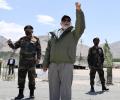
'It is a constantly evolving situation and will require deft handling at the ground level and at the highest level of military, diplomatic and political leadership,' observes Colonel S Dinny (retd), who served as Commanding Officer of an infantry battalion deployed in the Pangong Tso area.

The heightened state of alert was only relaxed after Wang met his Jaishankar in Moscow on Friday on the sidelines of the Shanghai Cooperation Organisation summit, a second source said.
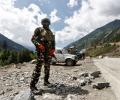
At a virtual media briefing, Ministry of External Affairs (MEA) Spokesperson Anurag Srivastava said disengagement of troops is a complex process which would require mutually agreed 'reciprocal actions'.

'He is psychologically preparing the PLA and the Chinese public to avoid a loss of face.'
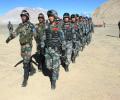
During the course of the intense and complex negotiations between senior commanders of the two armies that ended at 2 am on Wednesday, the Indian delegation also apprised the Chinese PLA about the "red lines" and conveyed that the onus was largely on China to improve the overall situation in the region, the sources said.

'The Chinese -- up to the highest leadership -- will avoid a conflict because they know they will be badly licked.' 'The reputation they have painstakingly built over the last two-three decades of being a global power will be destroyed.'

India and China will complete the disengagement process in the Gogra-Hotsprings area in eastern Ladakh by September 12, the External Affairs Ministry said on Friday.

China said that after this incident both sides are in communication and coordination on the matter through diplomatic and military channels.
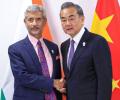
The joint statement said Jaishankar and Wang agreed that both sides should take guidance from the series of consensus reached between leaders of the two countries on developing India-China relations, including not allowing differences to become disputes.

Defence Minister Rajnath Singh on Thursday held talks with his Chinese counterpart Li Shangfu and is learnt to have discussed the lingering border row in eastern Ladakh.

Railway authorities have increased the presence of security personnel in the Guwahati Railway Station.

The Chinese inference is that if the Chinese visa is embossed on an Indian passport, held by Indian citizens from Arunachal Pradesh, it may be tantamount to recognising Indian sovereignty over Arunachal Pradesh, states Rup Narayan Das.

'Why wouldn't so strategically-minded an adversary, such as China, not militarily exploit to the maximum Indian timidity, stupidity, and cupidity all along the LAC and legitimate, as it has done so often in the past, the fait accompli of incremental territorial grabs which, by the way, is its strategy and policy as implemented on the ground?'

"Our worry is that a small mistake, an accidental exchange of fire at night, might lead to an unintended escalation," a senior officer confessed
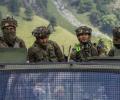
India and China on Saturday held another round of military talks with a focus on taking forward the disengagement process in Hot Springs, Gogra and Depsang in eastern Ladakh and bring down the tensions in the region, official sources said.

The Chinese have just one commander for all the forces confronting India. Commanders of all these forces answer to one man, and one headquarter. India, on the other hand, offers a diversity of options that is a military embarrassment in the 21st century. In Arunachal and Sikkim-Bhutan, the Eastern Army Commander is in charge. In the Uttarakhand (central) sector, it will be the Central Army Commander. The Himachal-Tibet border is the domain of the Western Army Commander. And all of Kashmir and Ladakh further on, the Northern Army's. Effectively, an array of at least eight 'three-star' commanders will be arrayed against one Chinese, says Shekhar Gupta.
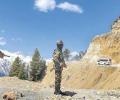
In the next few days, Indian Army will carry out a detailed verification to check actual implementation of the disengagement process, he said. It is learnt that the mutual disengagement in Gogra (patrolling point 17A) is expected to be completed by Thursday.
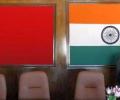
The sources said the focus of the talks was to take forward the disengagement process in friction points like Hot Springs, Gogra and Depsang in eastern Ladakh.

The two sides held diplomatic talks through video conference on the border standoff in midst of fresh details emerging that China has strengthened its position in several areas in eastern Ladakh including Galwan Valley where a violent clash on June 15 left 20 Indian soldiers dead.
The statement of Commander of US Indo-Pacific Command Admiral John Aquilino on Wednesday came ahead of the 15th round of high-level military talks between India and China on March 11.

Another round of diplomatic talks under the framework of the Working Mechanism for Consultation and Coordination is expected to be scheduled soon.
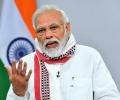
The military brass is learnt to have apprised Modi about the evolving situation in eastern Ladakh, though officials maintained that the agenda of the pre-scheduled meeting was to discuss the ambitious military reforms and ways to boost India's combat prowess.

The Chinese military has already completed moving back its troops from the face-off sites in Galwan Valley, Gogra and Hot Springs in line with the first phase of the disengagement process from the friction points on the LAC in eastern Ladakh, sources said. The main focus now shifts to Pangong Tso. India has been insisting that China must withdraw its forces from areas between Finger Four and Eight.

The step has been taken to boost tourism in Ladakh and give people a window to appreciate the tough work done by Army jawans and engineers in extreme weather and inhospitable terrains, he said.
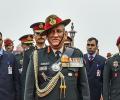
The creation of a CDS has got the head right. Issues that were not talked about for years are now being discussed, points out Ajai Shukla.

Chinese Foreign Minister Qin Gang reiterated that the situation at the India-China border is generally stable and both sides should consolidate the present achievements and strictly abide by the relevant agreements while pushing for further cooling and easing of the conditions for sustainable peace and tranquillity at the frontier.

He was the army commander who planned Operation Bluestar. As army chief he planned Operation Brasstacks which rattled the Pakistan army. General K Sundarji was brilliant, ambitious and controversial, remembers Rahul Bedi.

'The wise men learn lessons in war.' 'The smart men learn lessons from others, it's only the foolish who learn the wrong lesson.'

The Indian Army has been matching up to the Chinese build up in both Pangong Tso lake and Galwan Valley, the two locations in Ladakh which have witnessed major reinforcement of troops in the last two weeks, sources said. There was very little chance of easing of tension anytime soon as both sides are aggressively holding onto their respective positions, they said.
In a written reply to a question in Lok Sabha, Minister of State for External Affairs V Muraleedharan gave a brief account of the four-month-long standoff and said the Chinese side attempted to transgress the Line of Actual in several areas of the western sector since mid-May.
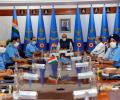
Rajnath appreciated the proactive response by the IAF in bolstering its operational capabilities over the past few months.
 © 2026 Rediff.com - Advertise with us - Disclaimer - Privacy Policy - Sitemap - Feedback - About us - Terms of use - Grievances